

360 materials rehandler training, also known as material re-handler training, is the accredited course for operators who use a 360 material handler: the high-cab, long-reach machine that loads, sorts and moves bulk materials with a grab or magnet in scrap yards, waste and recycling sites, ports and timber yards. It gives your team the skills, safety knowledge and nationally recognised certificate to operate a material handler safely, from setting up on stabilisers and working within the machine’s stability limits to grab and magnet control and slewing safely around people and vehicles.
You may see it called a material handler licence, but UK law does not require one. The correct qualification is a Certificate of Basic Training, issued after completing an accredited course.
HL Training delivers ITSSAR accredited material handler training on-site at your premises, anywhere in the UK, with novice, experienced, conversion and refresher courses.
Call us today on 0117 952 5625 or send an enquiry to book your course.
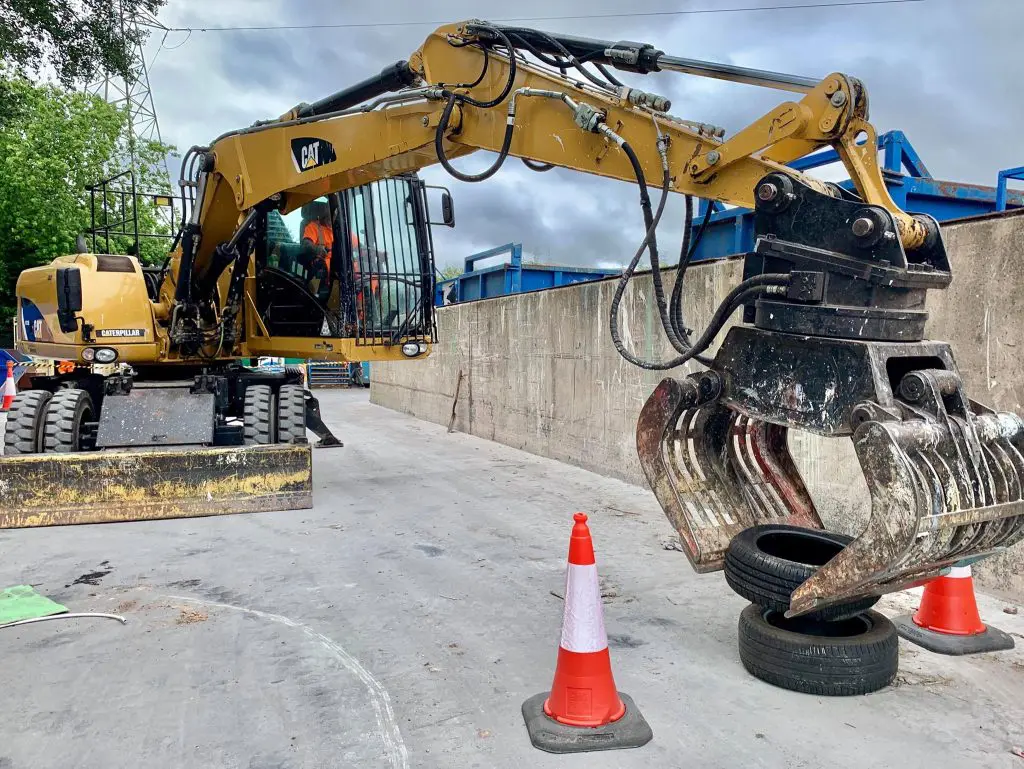
A 360 material handler, also called a materials rehandler or scrap handler, is a purpose-built machine for picking up, sorting and loading loose and bulk materials. It has a slewing upper structure that rotates through 360 degrees, a long boom and stick for extra reach, and a raised or hydraulically elevating cab, so the operator can see down into skips, bays, trailers and ship holds while loading.
Instead of a digging bucket, a material handler normally works with a grab or a magnet: an orange-peel or multi-tine grab for scrap and mixed waste, a clamshell grab for loose bulk materials, a sorting grab, a log grab for timber, or an electromagnet for ferrous metal. Wheeled material handlers set up on stabilisers or outriggers, while other models run on tracks, sit on a fixed pedestal or travel on rails. Well-known makes include Sennebogen, Fuchs, Liebherr and Cat, and some sites use a converted machine with a high cab and a grab.
The machine is built on an excavator-style chassis, but the job is very different. A material handler spends its day lifting and slewing loads at height and at long reach, often over vehicles, bays and walkways, so the operator needs specific training in stability, visibility and attachment control. If your team digs and trenches rather than handling materials, our 360 excavator training is the course you need.
You will find material handlers wherever large volumes of loose material are moved every day. Scrap and metal recycling yards use them for scrap handling, with magnets and orange-peel grabs feeding shredders and shears and loading bulk trucks. Waste transfer stations and materials recovery facilities use them for waste handling, feeding picking lines, pulling bulky items out of mixed waste and loading outgoing trailers. Ports and docks use them to load and unload bulk cargo, timber yards, sawmills and biomass plants use them with log grabs to move and stack timber and wood fuel, and demolition and construction sites use them to sort and load materials for recycling.
Each of these sites brings its own hazards: mixed and unpredictable loads, falling material, fire risk in scrap and waste stockpiles, constant vehicle movements and people working close to the machine. Every operator needs to understand the specific machine, its load chart, the attachment fitted and the site rules before every task.
We deliver novice, experienced, conversion and refresher courses directly to your site, scheduled around your operation.
Every material handler training course combines theory and practical training, assessed to the ITSSAR standard and suited to each delegate’s experience. We check each delegate’s previous experience before the course so the training meets their needs. No previous experience is assumed on the novice route: we start with how a 360 material handler works and build to safe, productive operation on your own machine and attachments. Experienced operators with years on the machine but no formal certificate can take a shorter experienced operator course, and refresher training keeps the skills of certified employees up to date.
The course covers PUWER 1998, LOLER 1998 and the Health and Safety at Work etc Act 1974, so operators understand their legal responsibilities, the employer’s duty of care and why only trained and authorised people may operate the machine.
Instructors explain the cab and cab riser, controls and instruments, slew and travel functions, hydraulic systems, stabilisers and every safety device fitted, using the manufacturer’s handbook for the model the delegate will operate.
How to position the machine on firm, level ground, set up on stabilisers or outriggers where fitted, follow safe parking procedures with the attachment lowered at the end of each task, read the load chart, and understand how reach, slew position and the weight of the grab or magnet affect stability. Delegates learn why a material handler can become unstable when a load is lifted at long reach or slewed over the side.
How to pick up, sort and place material accurately with the grab or magnet fitted, how load behaviour changes with different materials, and how to choose a suitable attachment for the task. Delegates practise loading vehicles, containers, skips, hoppers and shredders, building and working stockpiles, and avoiding dropping material from height. Training covers a range of attachments, including changing and checking them where your site uses more than one.
Controlling the attachment while monitoring blind spots and tail swing, keeping pedestrians and vehicles out of the slew radius, helping to create and maintain safe exclusion zones, agreeing clear communication signals with a banksman or signaller before work starts, and checking for overhead hazards such as power lines and structures before raising the boom.
What to do if the machine develops a hydraulic or mechanical fault, a load becomes unstable, a fire starts in the material being handled, or the boom comes close to overhead power lines, including how to make the machine safe and report the incident.
How to prepare the machine for work with a systematic daily check, carried out with real attention to detail, covering hydraulics and hoses, the boom, stick and pins, the grab or magnet, stabilisers, tyres or tracks, cab guarding and safety devices, plus running checks once the engine is started, safe access to the raised cab using three points of contact, and how to report defects so they are fixed before they cause damage or downtime.
A theory test covering legislation, stability, hazard awareness, attachments and operator responsibilities.
The practical tests assess safe operation across a range of tasks, including pre-use checks, setting up, loading vehicles and containers, sorting with the grab or magnet, and working safely around people and vehicles. Delegates must pass both the theory and practical testing before their certificate is issued on successful completion of the course.
Each machine type needs its own course and certificate. Training on the wrong category means the certificate will not be valid for the machine your operator actually uses.
High-cab, long-reach material handlers with a grab or magnet for scrap, waste, bulk and timber handling.
Tracked and wheeled excavators used for digging, trenching and earthmoving.
Wheeled loading shovels used to load and move loose material with a bucket.
Telescopic handlers used for lifting and placing loads with forks or a bucket.
If your operators already hold a certificate for a similar machine, a shorter conversion course is usually the quickest route. Call us on 0117 952 5625 and we will confirm the right course before you book.
We deliver materials rehandler training on-site, so your team trains on the material handler they will actually use, with the grab or magnet they actually fit, in the yard, bays and loading areas they work in every day. Assessments reflect your real materials, vehicle movements and site rules, which is the fastest way to build competence that transfers straight back to the job.
We deliver on-site training across the UK and can schedule training days around your shifts and deliveries, so the yard keeps moving while your team trains. Wherever you are in the UK, we come to you.
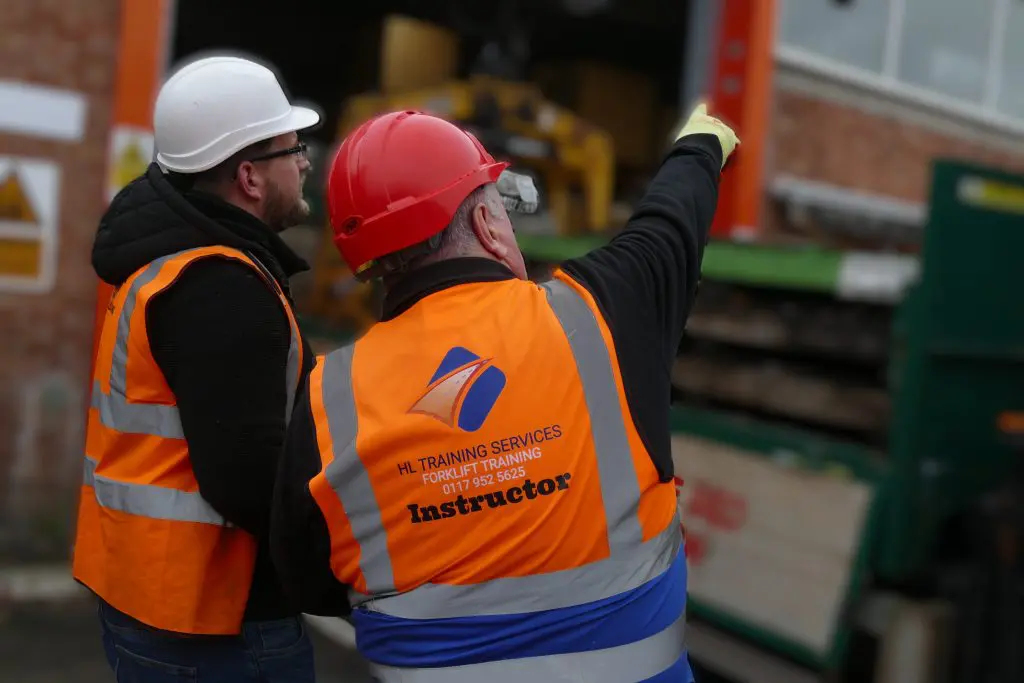
Legal Compliance: Under PUWER 1998, LOLER 1998 and the Health and Safety at Work etc Act 1974, employers must make sure anyone operating work equipment is properly trained and competent, in line with HSE guidance. Accredited material handler training gives you documented evidence that you have met that duty, and employers are expected to authorise competent operators in writing.
Reduced Accident Risk: The biggest dangers with a material handler are instability at long reach, material falling from the grab or magnet, people and vehicles inside the slew radius, and contact with overhead hazards. Accredited training teaches operators to recognise these risks and control every lift.
Site Productivity: A trained operator has the skills to load and sort accurately, works the machine in a smooth and efficient way and avoids damage to vehicles, bays and the machine itself. That means less downtime, fewer repairs, better efficiency and more throughput from your yard.
Nationally Recognised Certificate: Every delegate who passes the theory and practical testing receives a Certificate of Basic Training under the ITSSAR standard, recognised by employers across recycling, waste, ports and timber.
Insurance and Audit Protection: Insurers, HSE inspectors and customer audits all expect evidence of competence. Accredited certification and training records protect your business when an audit, inspection or incident investigation takes place.
| Type | 3:1 | 2:1 | 1:1 | ||||||
|---|---|---|---|---|---|---|---|---|---|
| NOV | EXP | REF | NOV | EXP | REF | NOV | EXP | REF | |
| ITSSAR | 37.5h | 22.5h | 7.5h | 30h | 15h | 6.25h | 22.5h | 11.25h | 5h |
Course duration depends on the delegate’s experience and the group size (1:1, 2:1 or 3:1). As a guide, novice courses take three to five days, experienced operator courses one and a half to three days and refresher courses up to one day. Conversion training is quoted individually. Full hours by ratio are shown in the Course Timings table. Call us to agree dates and duration for on-site training.
A materials rehandler, or material handler, is a 360 slewing machine with a raised cab, a long boom and a grab or magnet. It is used to pick up, sort and load bulk and loose materials such as scrap metal, waste, timber and bulk cargo.
No. A material handler is built on an excavator-style chassis, but it is designed for lifting, sorting and loading with a grab or magnet rather than digging. It has a raised cab and longer reach, and it needs its own training course and certificate.
No. There is no legal requirement for a licence in the UK. Employers must make sure operators are trained and competent, and the recognised proof is a Certificate of Basic Training from an accredited course. Most employers refresh training every three to five years, or sooner after a long break from operating, an incident, or if unsafe practice is observed.
A material handler operator’s role is to load, unload and sort material safely with a grab or magnet. Typical duties include feeding shredders and picking lines, loading trucks and containers, keeping stockpiles safe and tidy, and completing daily checks on the equipment. The role requires good spatial awareness, attention to the people and vehicles around the machine, and safe operation at all times.
The course is based on the attachments your team actually uses, such as orange-peel, multi-tine, clamshell, sorting or log grabs, or a lifting magnet. Tell us what your machine is fitted with and we will build the practical training around it.
Yes. Scrap and recycling yards are one of the most common places material handlers are used, and on-site training means your operators learn on their own machine, with their own magnet or grab, in the yard they work in every day.
Yes. We deliver this course on-site only, using your material handler and your attachments, so the training reflects your real site layout, materials and vehicle movements.
It depends on experience and group size. Novice courses take three to five days, experienced operator courses one and a half to three days and refresher courses up to one day. Smaller groups finish faster because each delegate gets more time on the machine.
We do not publish fixed prices because cost depends on experience level, the number of delegates and the location of your site. We provide clear quotes with no hidden costs.
Get your team trained and certified on 360 material handlers, delivered on-site at your yard anywhere in the UK. We deliver ITSSAR accredited materials rehandler training with a nationally recognised certificate, flexible scheduling and clear pricing. We provide all the information you need before you book. For further information or to check availability, get in touch.
HL Training · 0117 952 5625 · Enquire Now
This website uses cookies to improve your experience. Choose what you're happy with.
Required for the site to function and can't be switched off.
Help us improve the website. Turn on if you agree.
Used for ads and personalisation. Turn on if you agree.