
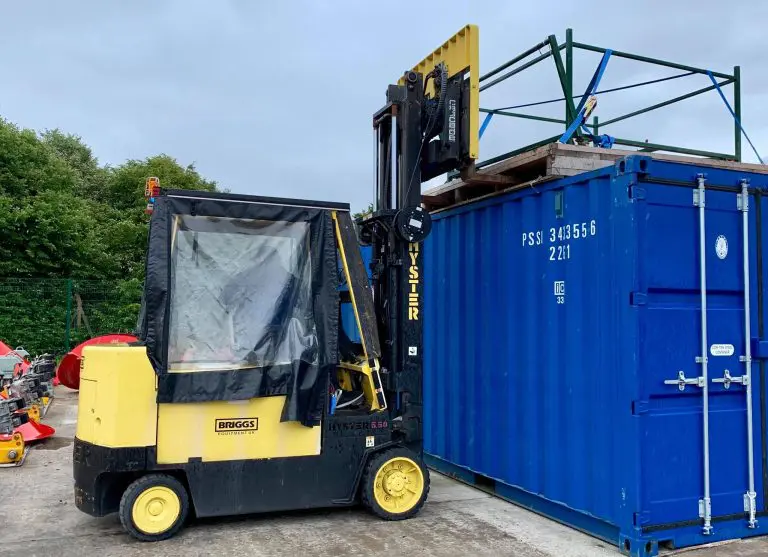
If your operation handles loads above 5,000 kg, such as steel sections, bulk materials or heavy pallets, you need operators certified on the right class of counterbalance forklift truck. The B2 rider-operated counterbalance forklift covers capacities from 5,000 kg up to and including 15,000 kg. Working at this weight band without proper training puts your people and your business at serious risk.
You’ll often hear this qualification called a “forklift licence”, and we use that term across our site because it’s what most people search for. Strictly speaking, there’s no such thing as a forklift licence in the UK. The correct qualification is a Certificate of Basic Training.
HL Training Services delivers accredited B2 counterbalance forklift training from our Bristol training centre and on-site at your workplace anywhere in the UK. Whether you need a novice course for operators with little or no experience, an experienced operator course, a conversion course from B1, or a refresher course, we provide comprehensive training that meets ACOP L117 standards and is backed by ITSSAR, AITT and RTITB accreditation.
Call us today on 0117 952 5625 or send an enquiry to book your training course.
A B2 forklift certification covers forklifts from 5,000 to 15,000 kg. B2 forklifts are distinct from smaller B1 models, which lift up to 5,000 kg. If your site regularly moves loads that exceed 5 tonnes (steel beams, large timber bundles, loaded shipping containers, or bulk aggregate) you need the B2 capacity band rather than a B1.
B2 counterbalance forklifts handle loads between 5,000 and 15,000 kg, and they are designed for stability with a rear counterweight that offsets the load on the front forks. B2 counterbalance trucks manage weights from 5,000 kg to 15,000 kg, making them versatile across a range of tasks. They are commonly used in warehousing and manufacturing sectors, as well as shipping ports and large warehouses. B2 forklifts are commonly used in industrial settings and construction sites, including steel fabrication yards, timber yards, ports and dockyards, heavy engineering plants, and aggregate suppliers.
Secure your place on our next available course. We offer flexible scheduling for novice, experienced, and refresher training at our Bristol centre or delivered directly to your site.
The B2 forklift certifcation requires both theoretical and practical training. All B2 Counterbalance Forklift training meets RTITB standards and follows HSE ACOP L117 guidance. B2 Counterbalance Forklift training includes four experience levels: novice, experienced, conversion and refresher, each tailored to the operator’s relevant experience.
Controls, indicators, hydraulic controls, capacity plate interpretation, manufacturer’s handbook guidance, and how attachments affect rated capacity and stability.
Load centres, the effect of height on centre of gravity, causes of load instability, braking distances with heavy loads, and safe travel on slopes. Understanding truck and load instability is critical at this capacity band.
Daily and weekly checks covering forks, mast, hydraulics, tyres, brakes, battery charging systems, and warning devices. Proper shutdown and fault reporting procedures.
A practical skills test that assesses the operator’s ability to operate the B2 counterbalance forklift safely and efficiently under observed conditions.
On successful completion, operators receive a nationally recognised certificate and photo id card from the relevant accreditation body (ITSSAR, AITT or RTITB), providing documentary evidence of formal training.
On-site B2 counterbalance training means your operators learn on the equipment and in the environment they’ll actually work in. No transporting heavy machinery to a training centre. No unfamiliar surroundings. Your team gets site-specific hazard awareness built into their operator training from day one.
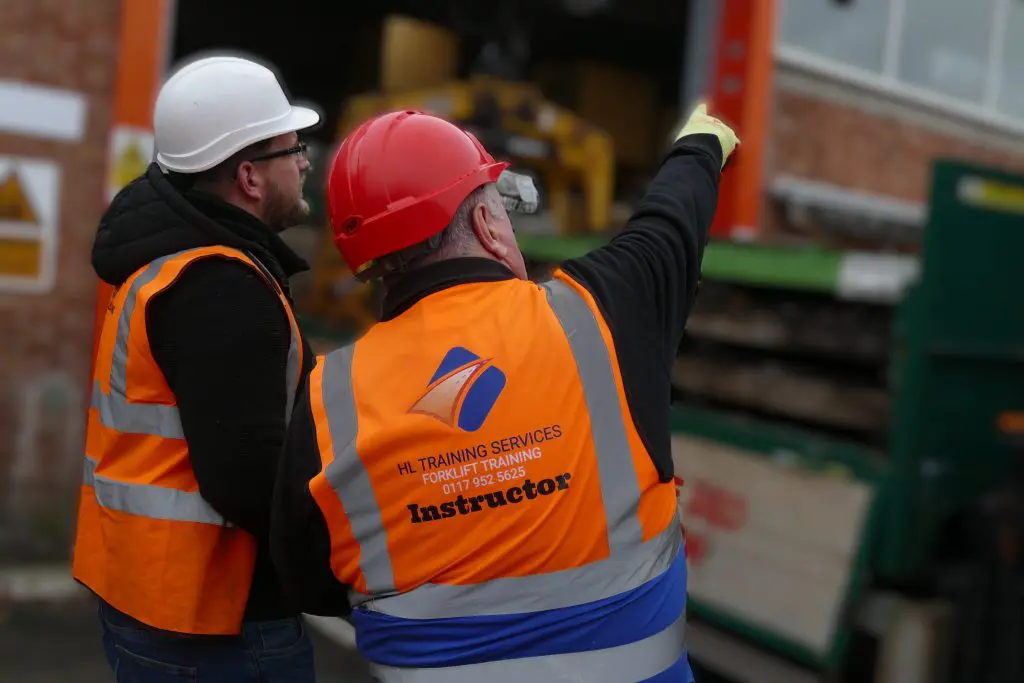
It is a legal requirement under PUWER 1998 for all operators to receive adequate training before using work equipment, including counterbalance forklift trucks. Beyond compliance, there are significant benefits:
Legal Compliance: Training complies with HSE Code of Practice L117 and PUWER Regulation 9, ensuring employers meet their legal duties. Accredited training through ITSSAR, AITT, or RTITB confirms adherence to HSE workplace transport requirements.
Reduced Accident Risk: Lift trucks cause about a quarter of workplace transport accidents annually. Proper training reduces risks like tip-overs, collisions, and load drops, while promoting safe, efficient operation across your workforce.
Site Productivity: Correctly trained operators move loads safely and efficiently, reducing damage to goods, avoiding downtime from incidents, and keeping operations running. At the B2 capacity band, where each load can weigh several tonnes, the efficiency gains from having competent operators are substantial. Critical skills in stacking, de stacking, vehicle loading and unloading directly improve throughput.
Nationally Recognised Certificate: Successful candidates receive an accredited certificate recognised UK-wide, enhancing employability and confirming compliance with national training standards.
Insurance and Audit Protection: Accredited training records support legal, insurance, and audit requirements. Many insurers require certified operator training as a condition of cover.
| Type | 3:1 | 2:1 | 1:1 | ||||||
|---|---|---|---|---|---|---|---|---|---|
| NOV | EXP | REF | NOV | EXP | REF | NOV | EXP | REF | |
| AITT | 37.5h | 22.5h | 7.5h | 30h | 18.75h | 7.5h | 22.5h | 15h | 3.75h |
| ITSSAR | 37.5h | 22.5h | 7.5h | 30h | 15h | 6.25h | 22.5h | 11.25h | 5h |
| RTITB | 37.5h | 22.5h | 7.5h | 30h | 18.25h | 6.25h | 22.5h | 14h | 5h |
Course timings vary depending on the accrediting body and the candidate-to-instructor ratio. Timings are available for Novice (NOV), Experienced (EXP), and Refresher (REF) operators across ITSSAR, AITT, and RTITB accreditation.
Training can be arranged at whichever location suits your business best. Many clients combine centre-based basic training with on-site familiarisation for the most thorough approach.
Both options deliver the same accredited training and testing to ITSSAR, AITT and RTITB standards. The best choice depends on your team size, site conditions, and operational schedule. We’re happy to advise.
We deliver B2 counterbalance forklift training at your premises anywhere in the UK. On-site training uses your own equipment in your actual working environment, so familiarisation is built in from the start. This is particularly valuable for heavy-duty sites where B2 forklifts operate. Your operators learn to handle the specific hazards, layouts and conditions they face daily.
Our dedicated Bristol training centre provides a controlled environment with purpose-built yard space, B2-class trucks, and classroom facilities. Centre-based training is ideal for individual bookings, smaller teams, or where your site cannot accommodate training alongside live operations.
Despite the common phrase, there is no such thing as a “forklift licence” in the UK. The correct qualification is a “Certificate of Basic Training”. For a B2, this certifies that an operator is competent to drive rider-operated counterbalance lift trucks with a rated capacity over 5,000 kg and up to and including 15,000 kg. The training and assessment are carried out in line with the HSE Approved Code of Practice L117, and the certificate is issued by an accredited body such as ITSSAR, AITT or RTITB. Operators must complete this training and assessment before operating these machines.
A B2 forklift certificate covers the safe operation of counterbalance forklifts within the 5,000–15,000 kg capacity band. This includes safe travel, load handling, stacking and de stacking, working on slopes, reversing, pre use inspection, and use of approved attachments. It does not cover reach trucks, sideloaders, or trucks above 15,000 kg (B3 category) — those require separate training.
B2 counterbalance training cost varies depending on the course level (novice, experienced, conversion or refresher), delivery location (on-site or centre-based), group size, and accreditation body. As a guide, industry pricing for B2 training tends to sit at the upper end of counterbalance course rates due to the heavier equipment and additional supervision required. Contact HL Training Services directly for a quote tailored to your requirements; we’ll give you a clear, transparent price with no hidden costs.
There is no fixed legal expiry date, but HSE guidance recommends refresher training every 3 to 5 years, or sooner if there is a change in truck type, attachments, working environment, or if any unsafe practices or incidents are identified.
The difference is the rated capacity of the counterbalance forklift truck:
Each step up involves larger, heavier machines with a higher risk profile. Training intensity, course duration and safety considerations increase with each capacity band. An operator with a B1 licence would need to attend a conversion course to operate B2 equipment.
No. The novice course is specifically designed for candidates with little or no experience of forklift operation. If you already hold relevant experience or a B1 licence, the experienced course or conversion course will be more appropriate and shorter in duration.
Call us on 0117 952 5625 or email us at [email protected] to discuss your requirements, or complete the enquiry form below and we’ll respond promptly with availability and pricing.
This website uses cookies to improve your experience. Choose what you're happy with.
Required for the site to function and can't be switched off.
Help us improve the website. Turn on if you agree.
Used for ads and personalisation. Turn on if you agree.