
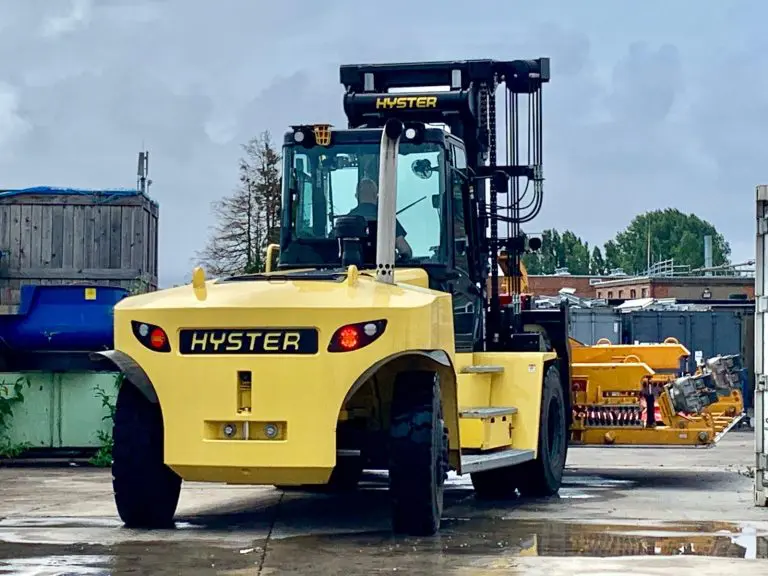
A B3 forklift is a rider operated counterbalance forklift truck with a rated lifting capacity over 15,000 kg, used for heavy-duty lifting in ports, steel yards, heavy engineering plants and large-scale manufacturing. Operating one means handling higher-risk loads with tighter stability margins, so B3 forklift training is what enables operators and employers to meet UK legal requirements, reduce accident risk and keep sites productive and insurable.
The B3 capacity band covers some of the most powerful counterbalance trucks on site, and the training reflects that: equipment familiarisation, legal responsibilities, load handling, safety procedures and the practical skills needed to operate these machines correctly. Whether you are a new operator, an experienced driver who needs certification, or a business arranging UK-compliant training for its team, this page explains what a B3 forklift is, how B3 training works, what certification you receive and the course options available.
There is no such thing as a forklift licence in the UK. The correct term is a Certificate of Basic Training. While many people search for a “B3 forklift licence” or “B3 FLT licence,” what you actually receive on successful completion is a nationally recognised certificate. We use the term “licence” on this page only because it is widely searched, but throughout your training and certification the correct terminology applies.
If you need B3 counterbalance forklift training for yourself or your team, HL Training can help.
Call us today on 0117 952 5625 or send an enquiry to book your training course.
A B3 rider operated counterbalance forklift is a heavy-duty lift truck with a rated capacity exceeding 15,000 kg. Under the ITSSAR and ABA classification system, B3 sits at the top of the counterbalance capacity ladder. People often compare these bands as training B1 B2 B3 when looking at capacity limits. B1 covers machines up to and including 5,000 kg. B2 covers machines over 5,000 kg up to and including 15,000 kg. B3 differs from other types of counterbalance qualification because it covers higher-capacity machines and heavier-duty operations above that threshold.
B3 forklifts are commonly utilised in heavy-industrial sectors and macro-logistics. You will find them in ports and docks handling heavy shipping components, in steel stockholding yards transporting structural steel and oversized timber bundles, across aggregates and quarrying operations, and in heavy engineering facilities. B3 forklifts are essential in heavy manufacturing for moving large machinery parts.
B3 articulated forklifts are also used in warehouses for their narrow-aisle capability, with articulated B3 forklifts able to operate in aisles 40% to 50% narrower than conventional trucks.
Ready to book your Counterbalance Forklift training? Secure your place on our next available course. We offer flexible scheduling for novice, experienced, and refresher training at our Bristol centre or delivered directly to your site.
B3 counterbalance training covers all the knowledge and practical skills you need to operate these machines safely and in compliance with UK legislation. The course is structured around seven key areas, with a clear route to obtaining the correct B3 qualification.
Covers the legal framework governing forklift operations. You will study the Provision and Use of Work Equipment Regulations 1998 (PUWER), particularly Regulation 9, the Lifting Operations and Lifting Equipment Regulations 1998 (LOLER), the Health and Safety at Work etc. Act 1974, and HSE Approved Code of Practice L117. These set out employer and operator duties for workplace safety and competence.
Introduces you to the controls, components, hydraulic systems and power sources specific to B3 counterbalance forklift trucks. You will learn how each system functions and what to check before every shift.
Critical at the B3 level. With loads exceeding 15,000 kg, understanding the stability triangle, centre of gravity shifts and rated capacity charts is essential to forklift safely operating under real conditions.
Teaches you how to carry out thorough pre-use checks and how to report defects correctly. This is a legal requirement under PUWER and LOLER, and a practical necessity when working with heavy equipment.
Requires you to demonstrate competence through a practical skills test. This includes a pre-use inspection test and a basic operator skills test covering laden and unladen handling, stacking at different heights, manoeuvring through chicanes and narrow spaces, and safe parking and shutdown procedures.
On successful completion, operators receive a nationally recognised certificate and photo ID card from the relevant accreditation body (ITSSAR, AITT or RTITB), providing documentary evidence of formal training.
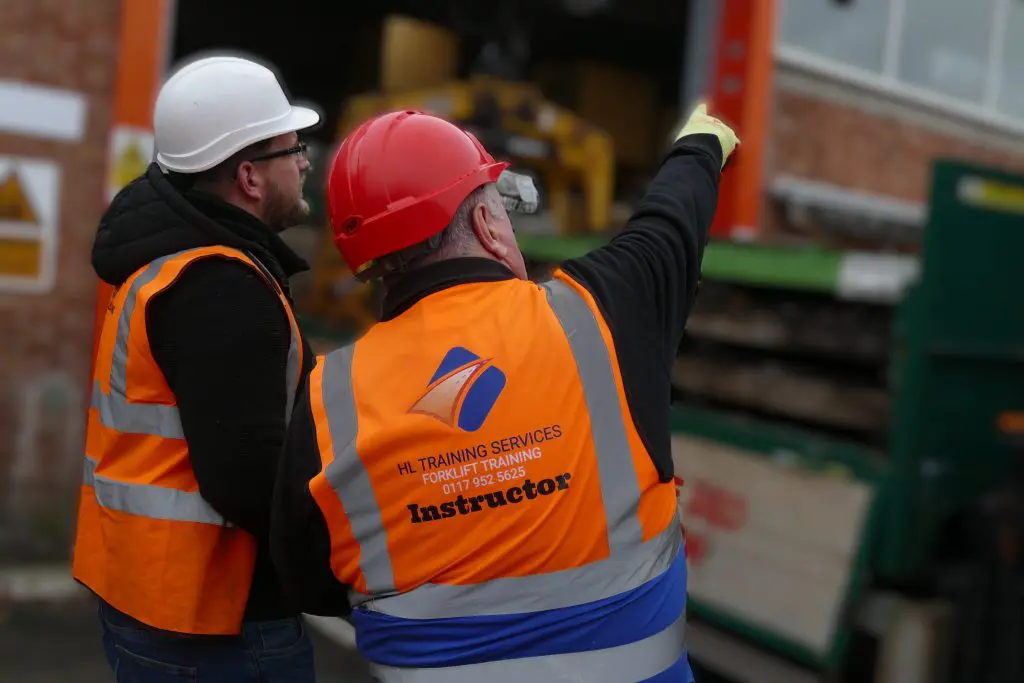
For B3 operations, on-site training is highly recommended. Your operators learn on the actual machines and in the real environments where they will work. This means training covers your specific loads, terrain, traffic management and site layout, making the transition from training to productive, safe operation much faster.
HL Training delivers B3 forklift operator training at workplaces across the UK, from ports and quarries to steel yards and manufacturing facilities.
Legal Compliance: UK law requires anyone operating a forklift truck to hold a valid certificate of competence. PUWER Regulation 9, LOLER 1998 and ACOP L117 all mandate that operators receive adequate training before using lifting equipment. Non-compliance can result in enforcement action. In one HSE prosecution case, an employer was fined £433,550 after a fatal forklift incident where inspections had not been completed after repair and a seatbelt was not used. B3 forklift training meets RTITB standards and HSE ACOP L117 requirements.
Reduced Accident Risk: The higher the capacity, the greater the risk. Machine tipping, load drops, collisions and mechanical failure all carry more serious consequences at B3 level. Proper operator training significantly reduces the likelihood of accidents, injuries and fatalities in the workplace.
Site Productivity: Being able to safely move loads exceeding 15,000 kg in a single lift eliminates the need to split oversized loads or use multiple smaller machines. Trained operators work more efficiently, reducing cycle times, minimising product damage and cutting downtime. In sectors like ports, steel stockholding and heavy engineering, this translates directly into faster throughput and lower operating costs.
Nationally Recognised Certificate: On successful completion, you receive a nationally recognised certificate with a photo ID card. This provides verifiable proof of competence for employers, auditors, and site managers. Certification is accredited through ITSSAR, AITT and RTITB, meeting industry standards across the UK.
Insurance and Audit Protection: Many insurers and principal contractors require current forklift certification before allowing operators on site. A valid certificate demonstrates compliance during audits and helps protect your business from liability.
| Type | 3:1 | 2:1 | 1:1 | ||||||
|---|---|---|---|---|---|---|---|---|---|
| NOV | EXP | REF | NOV | EXP | REF | NOV | EXP | REF | |
| AITT | 37.5h | 22.5h | 7.5h | 30h | 18.75h | 7.5h | 22.5h | 15h | 3.75h |
| ITSSAR | 37.5h | 22.5h | 7.5h | 30h | 15h | 6.25h | 22.5h | 11.25h | 5h |
| RTITB | 37.5h | 22.5h | 7.5h | 30h | 18.25h | 6.25h | 22.5h | 14h | 5h |
B3 forklift training can take 1 to 5 days depending on experience. B3 Novice Courses take 3 to 5 days. B3 Experienced Operator Courses take 2 to 3 days. B3 Conversion Courses take 1 to 2 days. B3 Refresher Courses take 1 day. Course duration depends on the experience level of delegates and the number of candidates per session. Contact us for a tailored quote with no hidden costs.
HL Training delivers B3 counterbalance forklift training either on-site at your workplace or at our Bristol training centre, giving you the flexibility to choose the option that suits your operation.
On-site delivery means your team trains on the machines and in the environments they actually work in. For B3 operations, this is particularly valuable. Heavy counterbalance FLT work typically involves specific site conditions, load types and traffic management challenges that generic training cannot replicate. We deliver on-site training at locations across the UK.
Our Bristol training centre is fully equipped for counterbalance forklift training, with qualified instructors, a purpose-built practical training area, and all the equipment and resources needed to deliver ITSSAR, AITT and RTITB accredited courses. The centre is suitable for experienced, conversion and refresher training. For novice B3 training on machines above 15,000 kg, on-site delivery using your own equipment is typically the most practical option.
There is no forklift licence in UK law. The correct term is a Certificate of Basic Training. When people search for a “B3 forklift licence” or “B3 FLT licence,” they are referring to this certificate. On successful completion of the course, you receive a nationally recognised certificate with a photo ID card, valid for 3 to 5 years.
A B3 forklift certificate covers the operation of rider operated counterbalance forklifts with a rated capacity exceeding 15,000 kg. A B3 forklift license covers loads exceeding 15,000 kg. This includes the theory and practical competence needed to operate these heavy-duty machines safely and in compliance with PUWER, LOLER and ACOP L117.
The difference is the capacity band of the machine:
An operator holding a B1 or B2 certificate needs a conversion course to move up to B3, as the machines, loads and operational risks differ significantly. All three fall under the counterbalance forklift training category.
B3 forklift training courses typically cost between £500 and £1,000, and renewal of a B3 forklift certificate costs between £150 and £300. Pricing depends on the experience level of delegates, the number of candidates, and whether training is delivered on-site or at our Bristol centre. Contact us on 0117 952 5625 or request a quote for further information with no hidden costs.
B3 forklift certificates are valid for 3 to 5 years. Refresher training is recommended every 3 to 5 years to maintain competence, keep knowledge current and ensure ongoing compliance. A refresher course is shorter than initial training and is designed for operators who already hold a valid or recently expired certificate.
No. HL Training offers four experience levels to match your background. A novice course is for those with no prior forklift training or experience, and a novice B3 forklift course can take 3 to 5 days. An experienced course is for operators with practical experience but no formal certificate. A conversion course is for workers who hold a B1 or B2 certificate and want to move up to B3. A refresher course is for operators who need to renew or update their existing B3 certification. Each level is assessed to the same standard, with all candidates required to pass both the theory test and practical assessments.
Contact us today to book your place or request a quote. Call us on 0117 952 5625 or email us at [email protected], or complete the enquiry form below and we’ll respond promptly with availability and pricing.
This website uses cookies to improve your experience. Choose what you're happy with.
Required for the site to function and can't be switched off.
Help us improve the website. Turn on if you agree.
Used for ads and personalisation. Turn on if you agree.