

Our accredited Forward Tipping Mini Dumper Up to 1 Ton training is designed for operators working with compact, site-based dumpers on construction sites, landscaping projects, groundworks, and restricted access sites. Delivered by experienced, ITSSAR, AITT, and RTITB-accredited instructors, our training equips operators with the knowledge and practical skills to operate a forward tipping mini dumper safely, efficiently, and in full compliance with UK health and safety legislation.
Whether your operators are completely new to mini dumpers or experienced operators due a refresher, HL Training has a course to suit. Call 0117 952 5625 or complete the enquiry form below to book.
A forward tipping mini dumper up to 1 ton is a compact, self-propelled site dumper with a skip or hopper at the front that tips forward to discharge its load. The “up to 1 ton” classification covers machines with a rated payload capacity of up to 1,000kg — smaller and more manoeuvrable than their larger counterparts, making them ideal for restricted access sites, narrow pathways, and jobs where a full-size dumper simply cannot reach.
Mini dumpers are widely used on domestic construction, landscaping, groundworks, and garden projects, as well as on larger sites where materials need to be moved through tight spaces. Their compact size makes them popular for tasks such as moving concrete, soil, aggregates, and rubble in areas where access is limited. However, despite their smaller size, mini dumpers still carry significant risk — particularly around tip-overs, slope operation, and working near excavations.
Forward tipping mini dumpers up to 1 ton are covered by a dedicated accreditation standard under ITSSAR, AITT, and RTITB, with course timings specific to this category reflecting the particular operating characteristics and risks of compact machines.
These machines are widely used for transporting and tipping loose materials such as concrete, aggregates, soil, sand, and rubble across site. Their large capacity and robust build make them essential on major earthmoving, groundworks, and infrastructure projects. However, their size and tipping mechanism also introduce specific risks that make proper, accredited operator training essential.
Forward tipping dumpers over 1 ton are covered by a dedicated ITSSAR training standard, with course timings that reflect the greater complexity and risk associated with operating larger capacity machines compared to the sub-1-ton category.
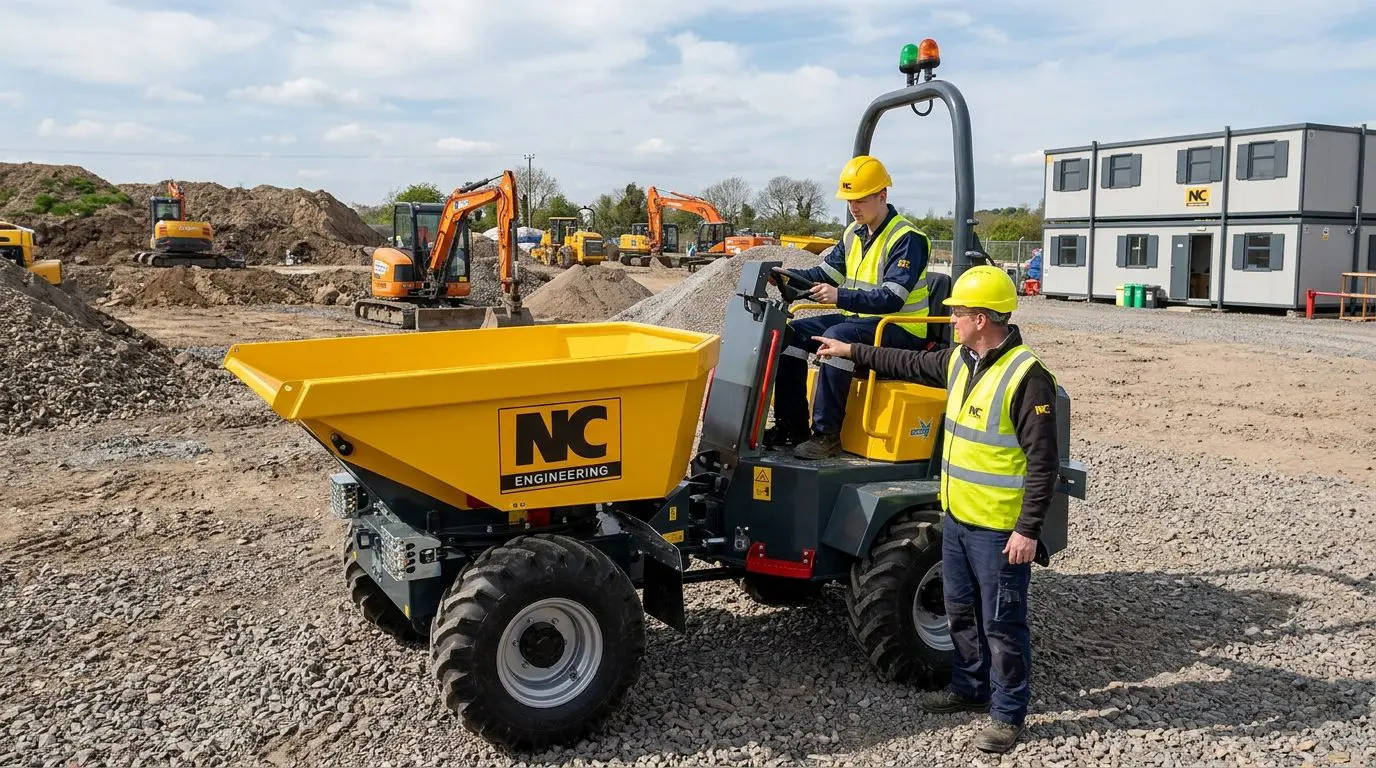
Our Forward Tipping Mini Dumper Up to 1 Ton training is structured to ensure operators develop the knowledge, confidence, and practical skills required to work safely on site. The course includes (but is not limited to):
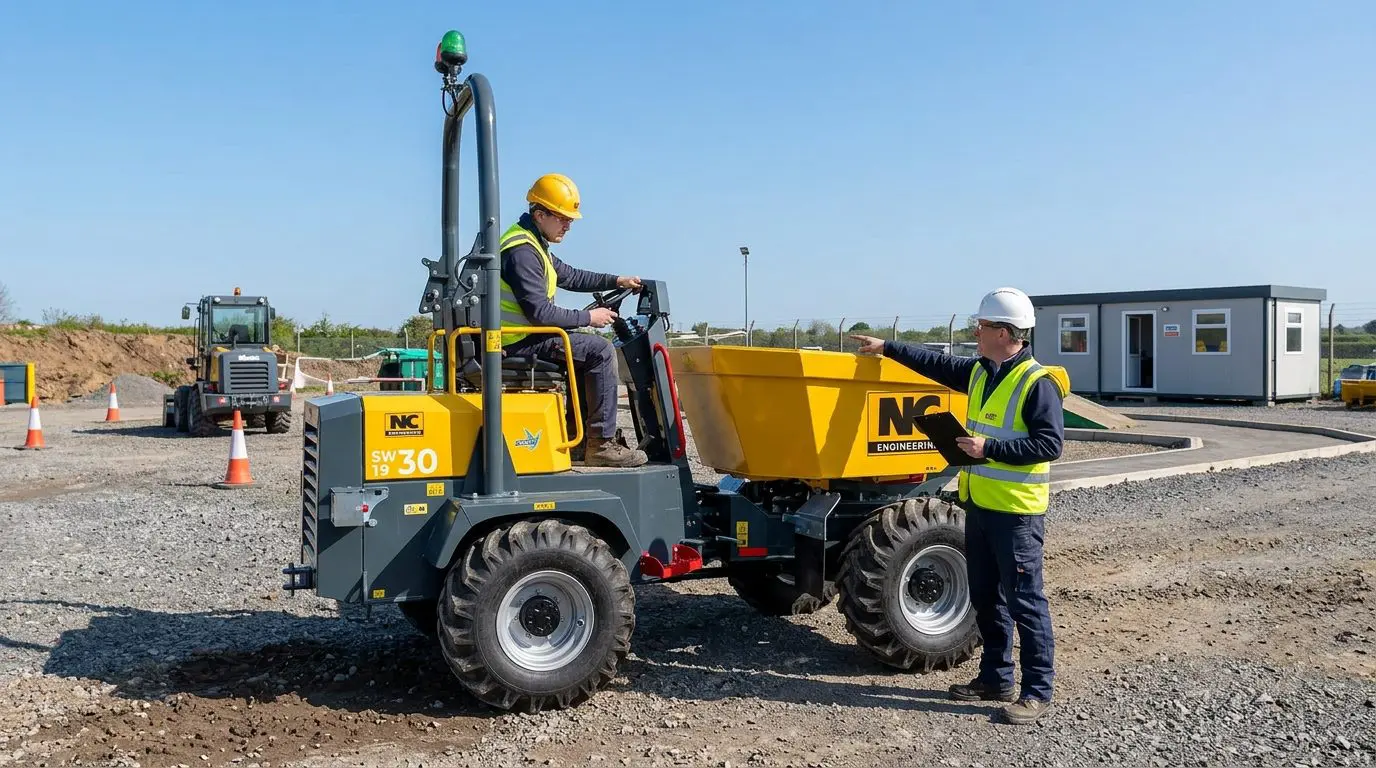
Candidates, a suitable training area, and an appropriate forward tipping dumper over 1 ton must be available for the full course duration. All candidates must actively participate in all elements, including the pre-use check, theory assessment, and practical test, to receive their accredited certificate.
Our training can be tailored to the specific machine your operators use on site and adapted to your working environment and ground conditions. Training is delivered at your site or at our Bristol training centre.
Our instructors come to you — training your operators on your own equipment, on your site.
Course timings vary depending on the accrediting body and the candidate-to-instructor ratio. Timings are available for Novice (NOV), Experienced (EXP), and Refresher (REF) operators across ITSSAR, AITT, and RTITB accreditation.
All course timings are based on a maximum 3:1 candidate-to-instructor ratio.
There are no course timings published for this course at the moment. Please contact us for more information
It is a legal requirement under PUWER 1998 for all operators to receive adequate training before using work equipment, including site dumpers. Beyond compliance, there are significant benefits to properly trained operators:
We offer fully mobile training, with our accredited instructors attending your site to deliver training on your own equipment and within your actual working environment. This is often the most practical option for construction businesses, as training takes place on the same machine operators will use daily.
Alternatively, training can be arranged at our Bristol training centre. Contact us to discuss your requirements and we will put together the most suitable training plan for your team.
Our training can be tailored to the specific machine your operators use on site and adapted to your working environment and ground conditions. Training is delivered at your site or at our Bristol training centre.
Yes. Our training is accredited by ITSSAR, AITT, and RTITB. Upon successful completion, operators receive a nationally recognised certificate confirming their competency on forward tipping mini dumpers up to 1 ton.
The two courses cover different machine categories with different payload capacities, operating characteristics, and risk profiles. The mini dumper up to 1 ton course covers compact machines used on restricted-access and domestic sites, while the over 1 ton course covers larger capacity machines. Operators trained on one category are not automatically qualified to operate the other.
HSE guidance recommends safety refresher training approximately every 3–5 years. Refresher training should also be arranged following any incident or near-miss, a prolonged period away from operating the equipment, or following significant changes to the working environment.
Yes. We offer fully mobile training and can attend your site to deliver training on your own mini dumper. This is usually the most practical option, particularly on smaller sites or where operators work with site-specific equipment and ground conditions.
Course duration depends on the accrediting body, the candidate-to-instructor ratio, and whether delegates are novice, experienced, or refresher operators. Refer to the course timings table above, or contact us and we can advise on the most suitable course length for your team.
Accredited, practical training delivered at your site or our Bristol training centre. Novice, experienced, and refresher courses available — accredited by ITSSAR, AITT, and RTITB with nationally recognised certification.
This website uses cookies to improve your experience. Choose what you're happy with.
Required for the site to function and can't be switched off.
Help us improve the website. Turn on if you agree.
Used for ads and personalisation. Turn on if you agree.