
Telehandler training is the accredited course that gives operators the skills, safety knowledge and nationally recognised certificate to legally operate rough terrain variable reach telehandlers on construction sites, farms and uneven ground. Without the correct Certificate of Basic Training for the J3 category, operators cannot legally or safely use a rough terrain variable reach truck.
The term “telehandler licence” is common but no such licence exists in UK law. The correct qualification is a Certificate of Basic Training, issued after completing an accredited course. This page covers key telehandler training details: legal requirements, machine familiarisation, stability, safety checks, practical operation, course types, delivery options, certificate validity and how to book.
HL Training offers accredited courses under ITSSAR, AITT and RTITB standards, with nationally recognised certificates and photo ID cards. We provide novice, experienced, conversion and refresher training on-site UK-wide or at our Bristol centre.
Call us today on 0117 952 5625 or send an enquiry to book your training course.
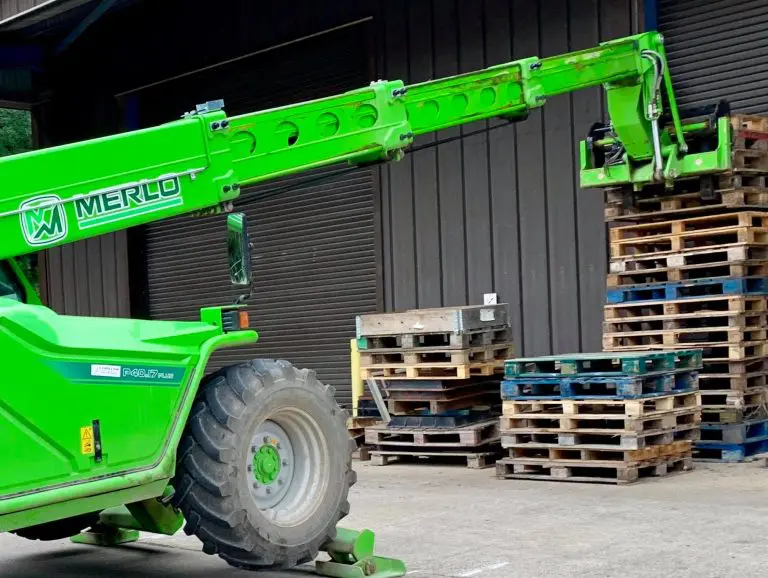
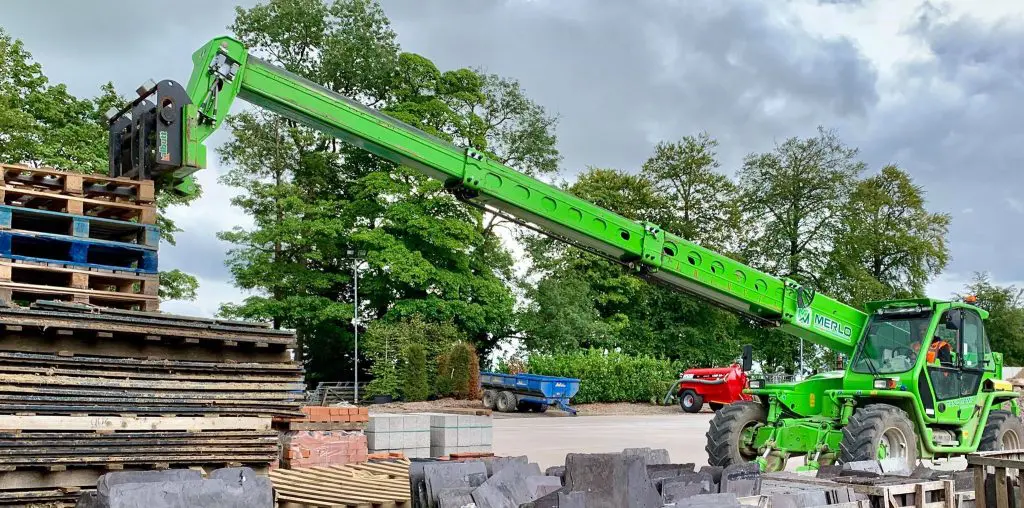
A rough terrain variable reach truck, formally classified as J3 under the ABA and RTITB category system, is the machine most people in construction and agriculture simply call a telehandler, telescopic handler, or telescopic handler forklift. It is built to do what counterbalance forklifts cannot: extend a telescopic boom forwards and upwards to place loads at height, reach over obstacles, and position materials where a vertical mast could never go.
The difference from a masted forklift is fundamental. A counterbalance forklift lifts vertically using a fixed mast. A telehandler uses a telescopic boom that extends diagonally, giving the operator variable reach as well as variable lift height. This makes the machine essential on construction sites, housebuilding projects, agricultural yards and anywhere materials need to be moved across uneven or unmade ground and placed precisely at elevation.
Telehandlers are used in construction and agriculture for lifting and moving heavy loads safely across rough terrain, including palletised blocks, timber, bulk bags and roofing supplies. The rough terrain chassis is built for demanding ground conditions with high ground clearance, large flotation tyres, four-wheel drive and robust suspension to handle mud, rutted tracks and slopes. Attachments like forks, buckets and jibs may be used, but the J3 classification applies to the base machine regardless of attachments.
As of 19 January 2026, the ABA removed the previous height restriction from the J3 category and merged the former J2 classification into J3. The J3 certificate now covers rough terrain variable reach operation at any lift height.
Secure your place on our next available course. We offer flexible scheduling for novice, experienced, and refresher training at our Bristol centre or delivered directly to your site.
Every J3 telescopic handler training course covers both theory and practical training, building the knowledge and practical skills your operators need to work safely and productively. These course details include safety checks and risk management education throughout. Telehandler courses include both theory and practical training elements assessed to national standards.
The course covers relevant regulations including PUWER 1998 (Provision and Use of Work Equipment Regulations), LOLER 1998 (Lifting Operations and Lifting Equipment Regulations), the Health and Safety at Work etc Act 1974 and the HSE Approved Code of Practice L117. Your operators will understand their legal responsibilities and the employer’s duty of care under these frameworks. Training helps to meet legal responsibilities regarding workplace safety.
Operators learn the controls, instrument panel, steering modes, boom extension and elevation, and all safety devices fitted to the telehandler. This includes understanding manufacturer’s instructions and how to configure the machine for effective operation across different tasks.
Telehandlers have a high centre of gravity which increases tipping risk, particularly when the boom is extended. Operators must understand load charts and machine limitations for safety. The training covers how outreach, boom angle, load weight, load centre and ground conditions all affect stability. Trained operators can better manage load dynamics and stability across varying terrain.
Under PUWER Regulation 9, operators must carry out daily pre-use safety checks before operating the machine. The course teaches a systematic walk-around inspection covering hydraulic systems, tyres, forks or attachments, safety features and defect reporting procedures. This supports safe shutdown procedures and ongoing machine reliability.
Practical training covers travelling forwards and backwards, positioning and manoeuvring with loads, boom operation under load, placing loads at height and reach, safe travel on slopes and uneven ground, observation techniques and avoiding tipping risk. Operators develop core skills in load handling and unloading procedures across realistic site scenarios.
The theory test consists of 25 multiple-choice questions with an 80% pass mark (20 out of 25). Questions cover legislation, stability principles, safety, hazard awareness and operator responsibilities. Proper preparation ensures candidates approach the technical tests with confidence.
The practical test evaluates the operator’s ability to demonstrate safe handling across a range of lift and reach situations. Practical assessments are conducted using terrain representative of real working conditions, assessing competency in pre-use checks, load handling, boom control and safe working practices. Telehandler operators must pass a theory and practical test after training, and the course must be completed before their certificate is issued.
The J-series covers several distinct machine types. Each requires its own training course and certificate. Choosing the wrong category means your qualification will not be valid for the machine you need to operate. Here are the main types:
A vertical mast forklift built for rough terrain. No telescopic boom. If your machine lifts vertically with a fixed mast on an off-road chassis, you need J1.
The standard telehandler with a telescopic boom, designed for unmade and uneven ground. This is the most common telehandler category in UK construction and agriculture.
A telescopic handler designed for hard standing surfaces such as yards, warehouses and industrial premises. If your telehandler operates on concrete or tarmac rather than rough terrain, J5 is the correct category.
A rotating turret telehandler capable of full slew. A separate machine type requiring its own dedicated training.
An articulated-frame telehandler with a telescopic boom and rough terrain chassis. Distinct steering and handling characteristics require separate certification.
If you are unsure which category applies to your machine or your site requirements, contact us on 0117 952 5625. We will help you identify the correct training course before you book.
On-site delivery means your team trains on the machine they will actually operate, on the ground they will actually work on. This is the most effective way to develop real-world competency: your operators learn to handle loads in the exact conditions they face daily, whether that is a muddy housebuilding plot, a sloping agricultural yard or a confined construction compound.
We deliver telehandler training courses at different locations across the UK. On-site training eliminates travel time for your team, reduces downtime and ensures every practical assessment reflects genuine site challenges rather than a controlled training yard. Proper training minimises the risk of accidents on construction sites by preparing operators for the specific hazards of their own working environment, including confined spaces, overhead services, pedestrian movements and variable ground conditions.
Legal Compliance: Employers require telehandler training to comply with safety regulations including PUWER 1998, LOLER 1998 and the Health and Safety at Work etc Act 1974. Without a valid Certificate of Basic Training, your operators are not legally qualified to use the machine. An operator certified on a counterbalance forklift needs conversion training before operating a telehandler, and the reverse also applies.
Reduced Accident Risk: Telehandlers have a high centre of gravity which increases tipping risk, especially when the boom is extended or the machine is working on slopes. Improper use of telehandlers can lead to equipment damage and maintenance issues. Safety training addresses overturning prevention, boom-extended stability, overhead hazards, load chart interpretation and pedestrian interface on busy sites. Proper training minimises the risk of accidents on construction sites.
Site Productivity: Effective telehandler operation can enhance job site efficiency and productivity. A trained operator places loads faster, with fewer repositioning moves and less wasted time. This translates to fewer delays, less material damage and better throughput across the working day.
Nationally Recognised Certificate: On successful completion, every delegate receives a nationally recognised Certificate of Basic Training with photo ID card. This certificate is accepted across the UK construction industry, giving operators access to sites managed by principal contractors, developers and plant hire companies. Holding an accredited qualification improves employability for operators across the sector.
Insurance and Audit Protection: Telehandler training helps employers reduce liability in construction. Accredited certification demonstrates compliance with HSE guidance, ABA standards and L117 requirements. When audits, inspections or incident investigations occur, documented proof of operator competency through an accredited qualification protects your business.
| Type | 3:1 | 2:1 | 1:1 | ||||||
|---|---|---|---|---|---|---|---|---|---|
| NOV | EXP | REF | NOV | EXP | REF | NOV | EXP | REF | |
| AITT | 37.5h | 22.5h | 7.5h | 30h | 18.75h | 7.5h | 22.5h | 15h | 3.75h |
| ITSSAR | 37.5h | 22.5h | 7.5h | 30h | 15h | 6.25h | 22.5h | 11.25h | 5h |
| RTITB | 42.5h | 23h | 8.5h | 33h | 19.5h | 7.25h | 25h | 15h | 5.5h |
There is no telehandler licence in the UK. The term “telehandler licence” is commonly used but is not a legally recognised qualification. The correct qualification required to operate a telehandler is a Certificate of Basic Training, issued upon successful completion of an accredited telehandler training course. This certificate confirms that the operator has the skills and knowledge to safely operate the machine on site.
Certificates are typically valid for 3 to 5 years, depending on the training scheme, frequency of use, and employer monitoring. Refresher training is recommended at that interval, or sooner if the operator changes machine class, has an extended period of absence, or is involved in a safety incident.
Get your team certified on the J3 rough terrain variable reach telehandler. We deliver accredited training courses with nationally recognised certification, on-site across the UK or at our Bristol training centre. Telehandler training is required for safe operation on construction sites, and we make the booking process straightforward with flexible scheduling and clear pricing.
HL Training · 0117 952 5625 · Enquire Now
This website uses cookies to improve your experience. Choose what you're happy with.
Required for the site to function and can't be switched off.
Help us improve the website. Turn on if you agree.
Used for ads and personalisation. Turn on if you agree.