

J8 articulated telehandler training is the accredited course for operators who use an articulated rough terrain telescopic handler: a compact telehandler that steers by bending in the middle, rather than turning its wheels. It gives your team the skills, safety knowledge and nationally recognised certificate to operate an articulated telehandler or telescopic wheel loader safely, from steering and stability to load charts, attachments and working in tight spaces.
You may see it called a telehandler licence, but UK law does not require one. The correct qualification is a Certificate of Basic Training, issued after completing an accredited course.
HL Training delivers accredited articulated telehandler training under ITSSAR, AITT and RTITB standards. We run novice, experienced, conversion and refresher courses on-site anywhere in the UK or at our Bristol training centre.
Call us today on 0117 952 5625 or send an enquiry to book your course.
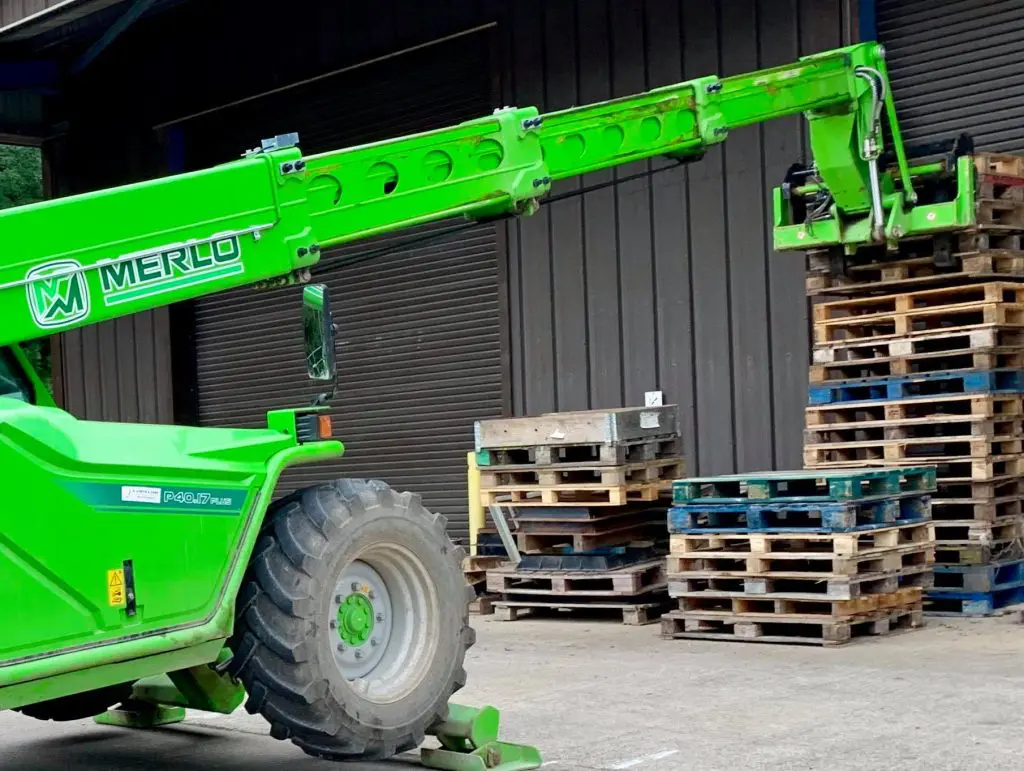
A J8 articulated telehandler, sometimes called a pivot steer telehandler or telescopic wheel loader, is a telescopic handler built on two frame sections joined by a central articulation joint. Instead of steering with the wheels, the whole machine bends at the joint, which gives it a very tight turning circle and lets the rear wheels follow the path of the front wheels.
Most articulated machines are compact and low, with a telescopic boom that extends forwards and upwards to give extra reach and lift height, so materials can be placed at height or loaded over a trailer side. Well-known examples include the JCB TM range, Kramer, Weidemann, Schäffer and Giant telescopic wheel loaders. Many smaller models, often described as a mini telehandler or small telehandler, use the same articulated design, as do larger machines marketed as a telescopic loader. Many are equipped with a quick-hitch so the driver can swap between a bucket, pallet forks, a grab and other attachments in minutes. That versatility, combined with the lifting capability of a telescopic boom and the agility of an articulated frame, is the key feature that makes them so popular.
That design makes the J8 different from a rigid-frame J3 telehandler or the rotating models covered by J7. Stability changes as the machine articulates, and is at its lowest when the machine is fully articulated with the boom raised or extended. Operators also need to manage the crush zone around the articulation joint. That is why J8 is a separate category with its own training and certificate.
Articulated telehandlers are designed for jobs where space is tight and access matters, offering the power and reach of a telehandler in a machine small enough to work inside buildings. You will find them in agricultural and agriculture-related work such as livestock buildings, feed yards and grain stores, as well as equestrian centres, landscaping, nurseries, recycling yards, builders merchants and small construction sites where a larger machine cannot turn.
On a farm, a compact telehandler often does the work of a tractor and loader, a forklift and a small loader in one machine. On a tight construction plot, its short wheelbase and low height make it easier to get through gateways, under doorways and around obstructions. Whatever the job, the person driving needs to understand the specific machine, its performance limits and the attachment fitted before every task. For example, a bucket full of wet material weighs far more than the same bucket of dry feed, and the load chart applies either way.
We offer flexible scheduling for novice, experienced and refresher courses at our Bristol centre or delivered directly to your site.
Every J8 articulated telehandler training course combines theory and practical training, assessed to national standards. No previous knowledge is assumed on the novice route: we start with a basic understanding of how a telescopic handler works and build to a full working knowledge of articulated operation, so delegates leave with the practical skills to work safely and productively.
The course covers PUWER 1998, LOLER 1998, the Health and Safety at Work etc Act 1974 and the HSE Approved Code of Practice L117, so operators understand their own legal responsibilities, the employer’s duty of care, and why lifting operations must be planned and supervised in line with the level of risk.
Instructors explain the cab layout and visibility, controls, instrument panel, boom extension and elevation, hydraulic functions and every safety device fitted, using the manufacturer’s handbook for the model the delegate will operate.
How articulated steering behaves at different speeds, why stability reduces as the machine articulates, and why turning with the boom raised or extended is one of the biggest causes of overturning. Delegates learn to travel with the boom retracted and lowered, and to keep turns smooth and controlled, especially on slopes and uneven ground.
How to read the load chart for each attachment, how lift capacity changes with boom angle, extension and load centre, and how to change and secure attachments safely using the quick-hitch. Training covers buckets, pallet forks and grabs, with handling of pallets, loose materials and bales, and explains why the safe lift capacity required for a job must always be checked against the chart before the lift.
Positioning in confined yards and buildings, safe clearances under doorways and roof beams, awareness of the crush zone around the articulation joint, and keeping pedestrians, livestock and other workers clear during the operation, using a banksman or signaller where visibility is restricted. Delegates also learn to check overhead hazards such as cables and roof beams before raising the boom.
How to carry out a systematic daily walk-around check covering hydraulics, fluid levels, tyres, the articulation joint, boom, attachments and safety features, plus running checks once the engine is started, safe mounting and dismounting using three points of contact, and how to report defects.
The theory testing element is 25 multiple-choice questions with an 80% pass mark, covering legislation, stability, hazard awareness and operator responsibilities.
The practical tests assess safe operation across a range of tasks, including pre-use checks, articulated manoeuvring, attachment changes, and lifting and placing loads at height. Delegates must pass both the theory and practical testing before their certificate is issued on successful completion of the course.
See all our telescopic forklift training courses, or use the guide below. Each J-series category is a different machine and needs its own course and certificate. Training on the wrong category means the certificate will not be valid for the machine your operator actually uses.
A vertical mast forklift on an off-road chassis. No telescopic boom.
The standard telehandler with a rigid chassis, built for unmade and uneven ground.
A telehandler for hard standing in warehouses, factories and industrial yards.
A rotating telehandler with a turret that slews through 360 degrees.
An articulated-frame telehandler or telescopic wheel loader that steers by bending at a central joint.
If your operators already hold a J3, J5 or J7 certificate and now need to use an articulated machine, conversion training is usually the quickest route. Call us on 0117 952 5625 and we will confirm the right course before you book.
On-site delivery means your team trains on the articulated telehandler they will actually use, in the yards, buildings and gateways they work in every day. Assessments reflect your real layout, the materials you actually handle and the attachments you actually fit, which is the fastest way to build competence that transfers straight back to the job.
We deliver articulated telehandler training on farms, yards and construction sites across the UK and can schedule training days around your work, so the job keeps moving while your team trains. Wherever you are in the UK, we come to you.
Prefer to send delegates to us? Our Bristol site at Barton Hill Trading Estate delivers the same ITSSAR, AITT and RTITB standard in a controlled setting. See our upcoming course dates for the next available start date.
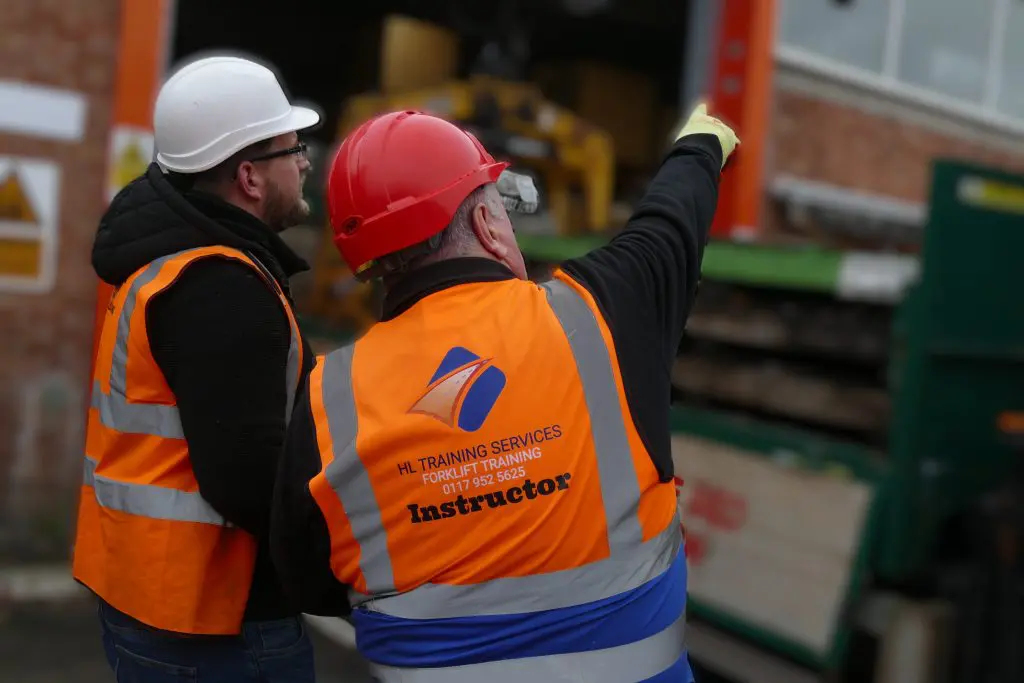
Legal Compliance: Under PUWER 1998, LOLER 1998 and the Health and Safety at Work etc Act 1974, employers must make sure anyone operating lifting equipment is properly trained and competent. Accredited J8 training gives you documented evidence that you have met that duty, and the HSE Approved Code of Practice L117 also expects employers to authorise competent operators in writing. A J3, J5 or J7 certificate does not cover an articulated telehandler, so anyone moving onto an articulated machine needs J8 training first.
Reduced Accident Risk: The biggest dangers with an articulated telehandler are overturning when turning with a raised or extended boom, working beyond the load chart for the attachment fitted, and people being caught near the articulation joint. Accredited training teaches operators to recognise these risks and control every lift.
Site Productivity: A trained driver gets more from a versatile machine, changing attachments quickly, handling materials accurately and moving efficiently around tight yards. That means less damage, less downtime, better efficiency and better performance from your equipment across every task.
Nationally Recognised Certificate: Every delegate who passes the theory and practical testing receives a Certificate of Basic Training with photo ID card under ITSSAR, AITT or RTITB standards, recognised by employers across agriculture, construction and plant operations.
Insurance and Audit Protection: Insurers, HSE inspectors and farm assurance or client audits all expect evidence of competence. Accredited certification and training records protect your business when an audit, inspection or incident investigation takes place.
| Type | 3:1 | 2:1 | 1:1 | ||||||
|---|---|---|---|---|---|---|---|---|---|
| NOV | EXP | REF | NOV | EXP | REF | NOV | EXP | REF | |
| AITT | 37.5h | 22.5h | 7.5h | 30h | 18.75h | 7.5h | 22.5h | 15h | 3.75h |
| ITSSAR | 37.5h | 22.5h | 7.5h | 30h | 15h | 6.25h | 22.5h | 11.25h | 5h |
| RTITB | 42.5h | 23h | 8.5h | 33h | 19.5h | 7.25h | 25h | 15h | 5.5h |
Course duration depends on the accrediting body, the delegate’s experience and the group size (1:1, 2:1 or 3:1). As a guide, novice courses take three to six days, experienced operator courses two to three days and refresher courses half a day to one day. Conversion training is quoted individually. Full hours by accrediting body and ratio are shown in the Course Timings table. For training options in Bristol, see our upcoming course dates, or call us to agree dates and duration for on-site training.
An articulated telehandler is a telescopic handler with a two-part chassis joined by a central pivot, so the machine steers by bending in the middle rather than turning its wheels. It is compact, very manoeuvrable and falls under the J8 category for accredited training.
Yes. Telescopic wheel loaders, such as the JCB TM range and similar machines from Kramer, Weidemann and Schäffer, are articulated telescopic machines and fall under the J8 category. If you are unsure about a specific model, tell us the make and model and we will support you in choosing the right course.
No. There is no legal requirement for one in the UK. Employers must make sure operators are trained and competent, and the recognised proof is a Certificate of Basic Training from an accredited course. Certificates are typically valid for three to five years before refresher training is due, or sooner after a long break from operating, an incident, or if unsafe practice is observed.
A J8 certificate covers the operation of articulated rough terrain telescopic handlers, issued under ITSSAR, AITT or RTITB standards. It does not cover rigid-frame telehandlers (J3 or J5), 360 slew telehandlers (J7), dumpers or loading shovels, which each need their own course.
Yes. Articulated telehandlers are widely used on UK farms, and we can train farm staff on their own machines and attachments at their own yard. On-site training means the course reflects the buildings, gateways and livestock areas your team works around every day. If you are buying a new machine, it is also a good time to book training so drivers learn its controls and limits from day one.
Yes. Operators who have successfully completed J3, J5 or J7 training can usually take a shorter conversion course that focuses on articulated steering, stability and attachment use. We quote conversion training individually based on each delegate’s experience.
It depends on experience and group size. Novice courses take three to six days, experienced operator courses two to three days and refresher courses half a day to one day. Smaller groups finish faster because each delegate gets more time on the machine.
We do not publish fixed prices because cost depends on experience level, number of delegates, whether training is on-site or in Bristol, and travel. We provide clear quotes with no hidden costs.
Get your team trained and certified on articulated telehandlers and telescopic wheel loaders. We deliver accredited J8 training with nationally recognised certification, on-site across the UK or at our Bristol training centre, with flexible scheduling and clear pricing. For further information or to check course dates, get in touch.
HL Training · 0117 952 5625 · Enquire Now
This website uses cookies to improve your experience. Choose what you're happy with.
Required for the site to function and can't be switched off.
Help us improve the website. Turn on if you agree.
Used for ads and personalisation. Turn on if you agree.