

Our accredited H1 Rider Operated Tow Tractor and Trailer training is designed for operators who ride on the vehicle itself while towing trailers, carts, or dollies across warehouses, distribution centres, and manufacturing facilities. Delivered by experienced, accredited instructors and recognised by ITSSAR, AITT, and RTITB, our H1 training equips operators with everything they need to handle a rider-operated tow tractor safely, efficiently, and in full compliance with UK legislation.
Whether your operators are brand new to tow tractors or experienced hands in need of a refresher, HL Training has an H1 course to suit. To find out more or book training, call 0117 952 5625 or complete the enquiry form below.
The H1 is the ABA category for the rider-operated tow tractor and trailer. Unlike a pedestrian-operated tug where the operator walks alongside the vehicle, an H1 tow tractor is driven, the operator sits or stands on the machine itself, giving them greater control and the ability to tow larger, heavier loads over longer distances within a facility.
H1 tow tractors are compact but powerful, purpose-built for moving multiple trailers or carts in a single run. They are a common sight in large distribution centres, automotive manufacturing plants, airports, and food production facilities, anywhere that requires high-volume, repetitive load movement across large floor areas.
Because the operator rides the vehicle, H1 training places particular emphasis on safe speeds, cornering technique, load management, and pedestrian awareness, all areas covered in depth during our accredited training programme.
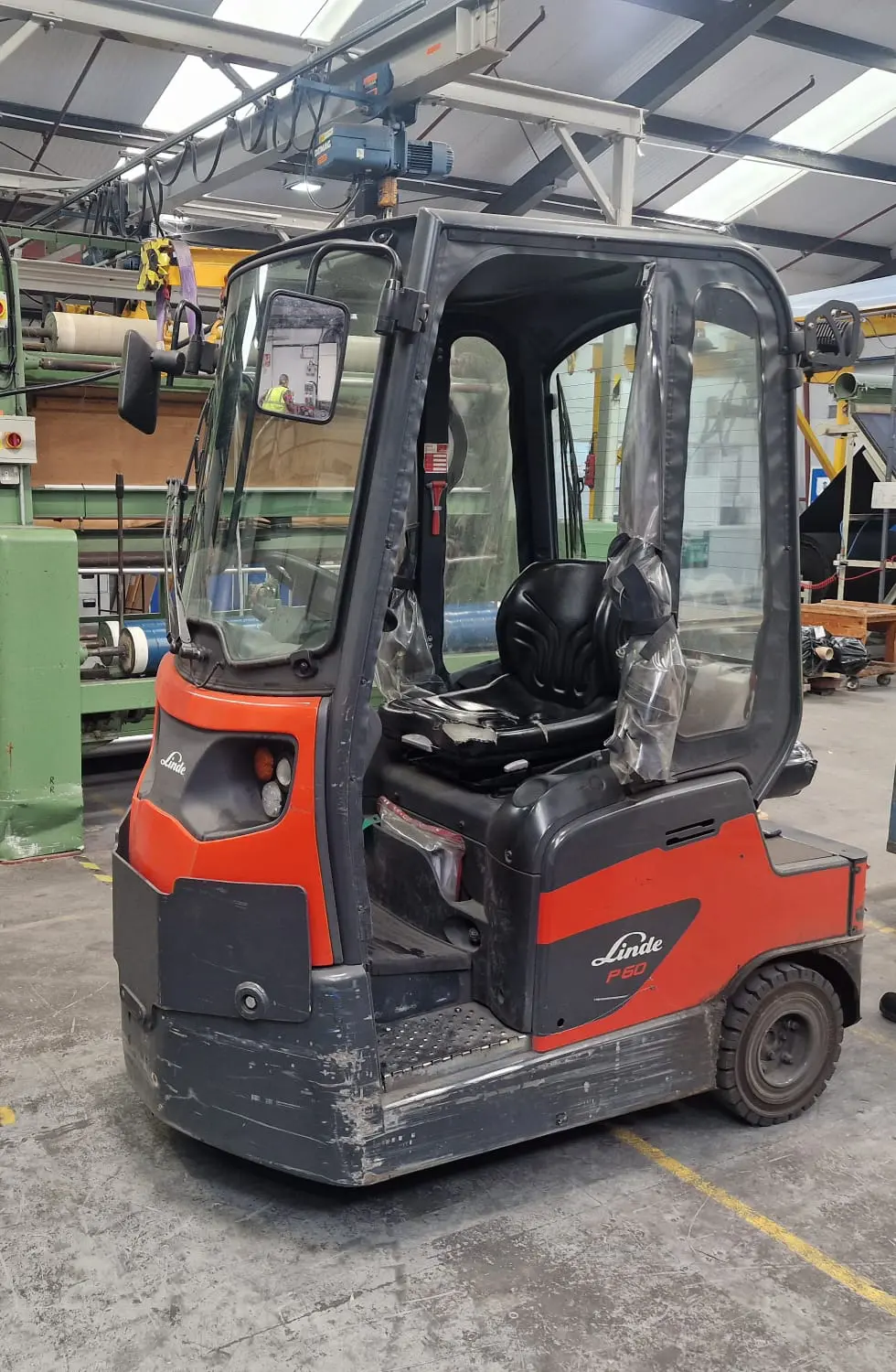
The H1 is part of the ABA’s H group, the dedicated category set for tow tractors and trailers. All three H categories require separate accredited training:
The H1 and H2 categories cover the same fundamental towing operations but differ in how the operator interacts with the vehicle. H1 is rider-operated, while H2 is pedestrian-operated. Operators already qualified in one category who need to use the other will require a separate accredited qualification.
Our H1 training is structured to ensure every operator develops the knowledge, confidence, and practical skills required to operate a rider-operated tow tractor safely and compliantly. The course includes (but is not limited to):
H1 course timings vary depending on the accrediting body and the candidate-to-instructor ratio. Timings are available for Novice (NOV), Experienced (EXP), and Refresher (REF) operators across AITT, ITSSAR, and RTITB accreditation.
All course timings are based on a maximum 3:1 candidate-to-instructor ratio.
| Type | 3:1 | 2:1 | 1:1 | ||||||
|---|---|---|---|---|---|---|---|---|---|
| NOV | EXP | REF | NOV | EXP | REF | NOV | EXP | REF | |
| AITT | 15h | 15h | 7.5h | 15h | 15h | 7.5h | 7.5h | 7.5h | 3.75h |
| ITSSAR | 22.5h | 7.5h | 7.5h | 15h | 6.25h | 6.25h | 11.25h | 5h | 5h |
| RTITB | 8.5h | 7.75h | 6.75h | 6.5h | 6h | 5.25h | 4.5h | 4.25h | 4h |
It is a legal requirement under PUWER 1998 for all operators to have received adequate training before using work equipment, including rider-operated tow tractors. Beyond compliance, there are significant operational and financial benefits to ensuring your H1 operators are properly trained:
Our H1 tow tractor training is delivered nationwide. We offer fully mobile training, with our expert instructors travelling directly to your site — meaning your team can be trained on the exact equipment and in the exact environment they work in every day. This approach removes the need for your operators to travel and ensures the training is as relevant and practical as possible.
Alternatively, training can be arranged at our Bristol training centre for individuals or smaller groups. Whatever suits your business, HL Training can accommodate it. Contact us to discuss your requirements and we will put together the most suitable training plan for your team.
Yes. All of our H1 training courses are accredited by ITSSAR, AITT, or RTITB — three of the UK’s leading workplace transport accrediting bodies. Upon successful completion, operators receive a nationally recognised certificate confirming their competency.
H1 covers rider-operated tow tractors, where the operator sits or stands on the vehicle. H2 covers pedestrian-operated tow tractors, where the operator walks alongside the machine. Both are separate ABA categories and require their own accredited training and certification.
HSE guidance recommends refresher training approximately every 3–5 years. However, refresher training should also be considered following any significant incident, a prolonged period away from operating the equipment, or following changes to the work environment or equipment in use.
Yes. We offer fully mobile training and can attend your site to deliver H1 training on your own equipment and in your own working environment. This is often the most practical and cost-effective option for businesses with multiple operators to train.
Each accrediting body has its own verification system. ITSSAR uses a TOPS number, AITT uses an ACORNS number, and RTITB uses a NORS number — all of which can be used to verify certification directly with the relevant accrediting body.
We combine thorough curriculums with the best training methods from certified instructors. Whether your operators are complete novices or experienced hands needing a refresher, we have an accredited H1 course to suit. Training delivered at your site or at our Bristol training centre.
Become an accredited H1 operator: Sign up for a training course today.
This website uses cookies to improve your experience. Choose what you're happy with.
Required for the site to function and can't be switched off.
Help us improve the website. Turn on if you agree.
Used for ads and personalisation. Turn on if you agree.